Alan Bernard Brazil is one of those figures who has managed to carve out two very different but equally influential careers — first as a professional footballer in the English game and later as a highly recognizable voice in British sports broadcasting. Although some know him primarily for his outspoken personality on radio, his legacy on the pitch as a powerful forward remains deeply etched in football history. In this article, we’ll explore the life of Alan Brazil in detail — from his early years in Glasgow to the heights of the First Division, and then into the world of media where he became a defining voice of UK sports radio.
Early Life and Introduction to Football
Alan Brazil was born on 15 June 1959 in Govan, Glasgow, Scotland, and grew up in an environment where football was more than just a pastime — it was part of daily life. Scotland in the 1960s and 1970s was a hotbed of football talent, and young Brazil quickly fell into the rhythm of the local game, turning heads with his natural ability and hunger to succeed. It wouldn’t take long for professional scouts to take notice.
From a young age, Brazil demonstrated a remarkable instinct for goal‑scoring. He progressed through local youth teams and eventually attracted the attention of Ipswich Town, a club then managed by the legendary Bobby Robson. While the path from Glasgow to East Anglia might seem unconventional, it was the start of something big. This move would launch Brazil into the heart of English football at a time when the league was physically demanding and fiercely competitive.
Settling into life in England was both a challenge and an opportunity for the young Scot. Away from his homeland, Brazil’s work ethic, strength and burgeoning confidence began to shine. He was not the flashiest footballer of his generation, but his fearlessness, physical presence and eye for goal made him a standout figure — traits that would become hallmarks of his playing identity.
By the late 1970s, Brazil had established himself in the Ipswich first team. His raw talent meshed with tactical understanding, and under the mentorship of Robson, he grew into a potent forward — someone capable of changing games and troubling defenses with consistency. This period laid the foundation for what would become one of the most memorable playing careers of his generation.
Rise to Prominence at Ipswich Town
Brazil’s footballing breakthrough came at Ipswich Town, where he became a central figure in the club’s most successful era. His rise was rapid: by the early 1980s he was one of the top scorers in the English First Division, and fans quickly took to his brand of direct, powerful attacking play. The highlight of his career came in 1981, when he played a key role in Town’s UEFA Cup success — a major European trophy that remains one of the club’s proudest achievements.
During this period, Brazil wasn’t just scoring goals; he was creating moments. With Ipswich Town, he combined physicality with surprising technical ability, winning over supporters with both determination and flair. His 22‑goal season in 1981–82 was one of the most prolific campaigns of his career and cemented his status as a household name among English football fans.
It was this form that also paved the way for international recognition. Brazil earned 13 caps for Scotland and was part of the national squad at the 1982 FIFA World Cup in Spain, a testament to his consistency and high level of performance at club level. While Scotland’s run in the tournament wasn’t extraordinary, the fact that Brazil was selected underscored his position among the country’s elite players at the time.
However, despite the highs, Brazil’s career was not without challenges. Physicality in English football sometimes took its toll, and recurring back injuries eventually began to affect his consistency on the pitch. Nonetheless, the impact he had at Ipswich Town — on and off the scoresheet — cannot be overstated.
Transfers and the Later Playing Career
After shining at Ipswich Town, Brazil made a big‑money move to Tottenham Hotspur in 1983. Although his time at Tottenham was relatively brief, it showcased his adaptability to new systems and environments. Spurs were a club with lofty expectations, and while Brazil didn’t reach the same heights he had at Ipswich, he nonetheless added experience and depth to their attacking options.
Following his spell in North London, Brazil signed with Manchester United, another iconic club in English football. At Old Trafford he continued to display the hard‑working forward qualities that had defined his career, scoring goals and creating opportunities. Alan Brazil While injuries continued to nag, Brazil’s professionalism ensured he remained a respected figure in the dressing room.
His senior career also included stints with Coventry City and Queens Park Rangers, among others, reflecting the journeyman’s path that many seasoned players take as they navigate the closing stages of their playing days. Despite the frequent moves, Brazil’s hunger and competitive spirit never dipped. His love for the game was unmistakable.
Yet, ultimately, it was a persistent back injury that forced him into early retirement — a fate that has befallen many great athletes whose bodies simply could not keep up with the demands of top‑level sport. For Brazil, though, this setback opened the door to a whole new career.
Transition Into Media and Broadcasting
Following retirement from football — a transition many players struggle to make — Brazil found his next calling in broadcasting. Initially appearing on television as a football analyst, he won praise for his candid opinions and ability to translate his on‑field experience into compelling commentary.
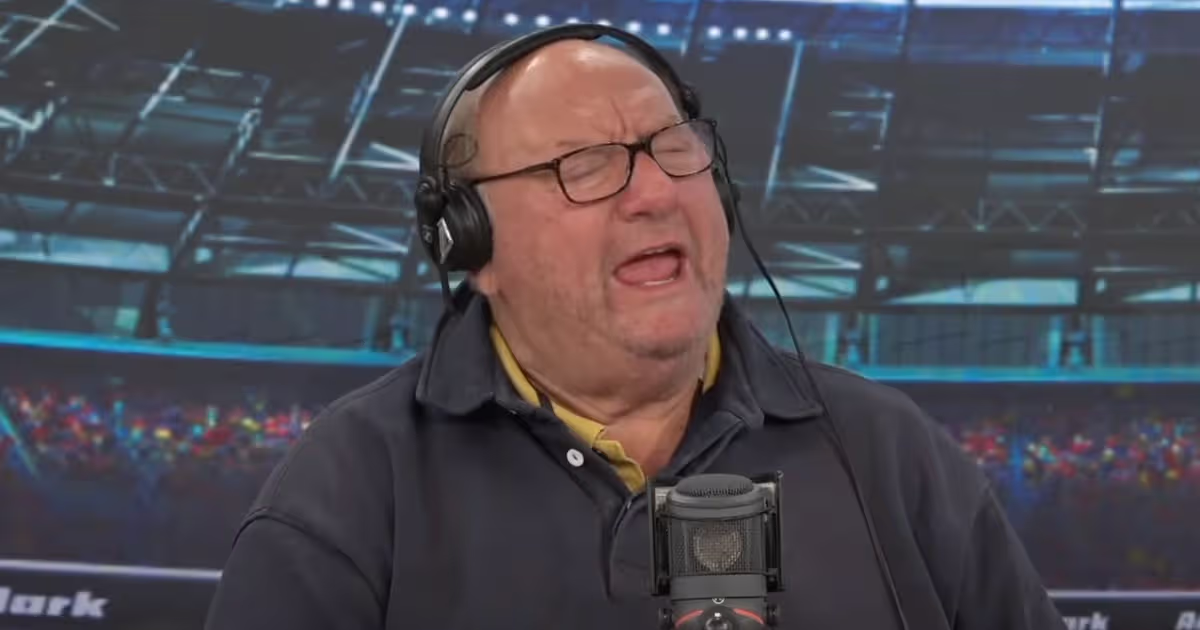
But it was on radio that Brazil truly made his mark. He became the host of the long‑running breakfast show on Talksport, known as the Alan Brazil Sports Breakfast. His comfortable style, quick humour and deep knowledge of football culture made the show a mainstay for sports fans across the UK. Over the years he developed a reputation for both entertaining debate and controversial takes — often sparking conversation and sometimes criticism.
Brazil’s presence on radio was not just about analysis; it was about personality. He attracted listeners not only for his insights into the beautiful game, but also for the humor and unpredictability he brought to the airwaves. His radio work helped popularize the format of fan‑driven sports talk in the UK and inspired many future broadcasters wishing to blend entertainment and expertise.
In addition to sports talk, Brazil occasionally ventured into other broadcasting projects. As of late he has hosted shows outside of pure sports content — including music and cultural segments — proving his versatility and broadening his appeal to a wider audience.
Personality, Controversies & Public Image
Alan Brazil’s public persona is a blend of passion, controversy and humour — something that has served him well on radio but equally attracted critique. His forthright comments on various sports topics, from men’s football to gender issues in sport, have sometimes drawn sharp reactions from listeners and fellow pundits alike.
Yet this is part of what makes him unforgettable. Whether you agree with him or not, his opinions spark debate — and that’s a marker of influence. The fact that he remains a widely discussed figure in sports media says a lot about how deeply he has embedded himself into British football discourse.
Beyond punditry, there are lighter moments that have endeared him to the public. Anecdotes shared on his shows, humorous exchanges with co‑hosts, and bits of football lore all contribute to the colourful image listeners associate with Alan Brazil. His personality has become a fixture of UK sports radio culture, and few broadcasters have inspired as much conversation — positive or otherwise — among fans.
Legacy and Influence
Looking back at Alan Brazil’s career, it’s clear that his influence is multi‑layered. Alan Brazil As a footballer, he achieved honours and success at the highest level of English football, including the UEFA Cup with Ipswich Town and honours with Manchester United and Tottenham.
As a broadcaster, he became one of the most recognizable voices in sports media, shaping how fans engage with football discussions every morning. His impact stretches beyond mere statistics; it lies in the generation of fans who grew up listening to his perspective on the sport.
Across his varied career, Brazil has shown a unique ability to adapt — from lethal striker to compelling communicator. His journey underscores a truth that not all athletes successfully transition to life after sport, but those who do can find even greater prominence in their second act.
Conclusion
Alan Brazil’s life in football and media offers a fascinating story of transformation, resilience and personality. He is a reminder that sporting greatness doesn’t only come in the form of trophies and goals, but also in how one connects with audiences — be they fans in a packed stadium or listeners starting their day with a radio broadcast. From the roar of the terraces to the buzz of live radio, Alan Brazil remains a significant figure in the world of football and broadcasting — a man whose voice and legacy will be remembered for generations.